


Industrial steam boilers are what’s popular in industries like agriculture, aerospace, and more for providing power, and heat and more. But what are they for industries? How do they work? Are they really necessary and what are the common types of steam boilers and where they are often used? Today we are going to explore their definition, functionality, types, and much more. This can help in making informed decisions about their use and maintenance.
Key Takeaways
-
A steam boiler heats water to create steam for various industrial uses.
-
There are different types of steam boilers, including firetube and watertube designs.
-
Steam boilers operate by transferring heat through radiation, convection, and conduction.
-
Regular maintenance is essential to ensure the efficiency and safety of steam boilers.
-
Steam is a vital energy source for many industries, powering processes like manufacturing and power generation.
What Is a Steam Boiler?
Definition and Basic Function
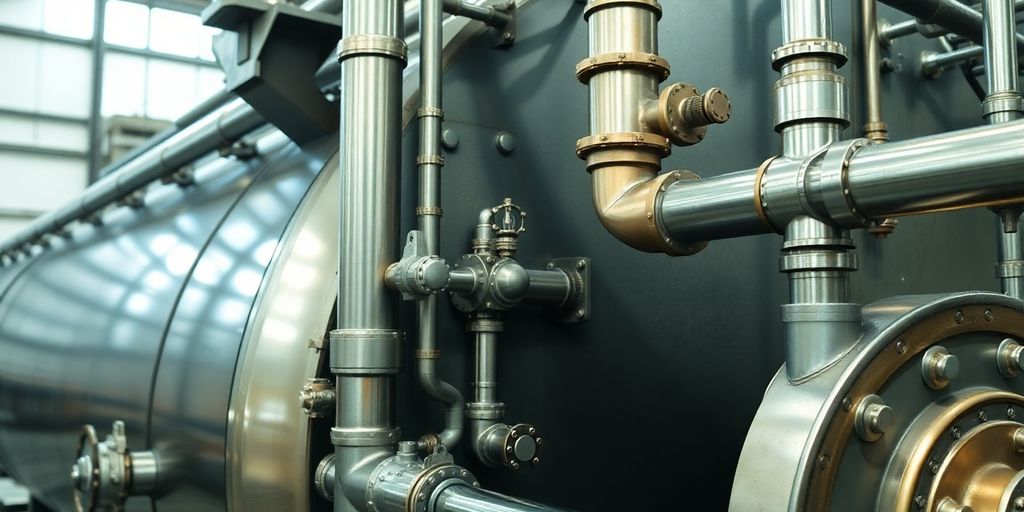
A steam boiler is a system designed to generate steam by heating water. It works by burning fuel to create heat, which then warms the water until it turns into steam. This steam can be used for various purposes, such as heating buildings, powering machinery, or even generating electricity. The boiler acts as a heat exchanger, transferring heat from the combustion process to the water. The steam produced is then transported through pipes to where it is needed.
Key Components of a Steam Boiler
Steam boilers consist of several key components that work together to produce steam efficiently. Here are the main parts:
-
Burner: This is where the fuel is mixed with air and ignited to create heat.
-
Combustion Chamber: This is the area where the burning of fuel takes place, generating heat.
-
Heat Exchanger: This component transfers heat from the combustion gases to the water without mixing the two.
-
Expansion Tank: This helps manage pressure changes in the system by allowing water to expand as it heats up.
-
Steam Control System: This regulates the temperature and pressure of the steam produced.
Common Applications of Steam Boilers
Steam boilers are used in various industries and applications. Some common uses include:
-
Manufacturing: Many factories use steam for processes like heating and sterilization.
-
Power Generation: Steam is often used to drive turbines that generate electricity.
-
Food Processing: Steam is used for cooking, cleaning, and sterilizing equipment.
-
Heating Systems: Many buildings use steam heating systems to keep spaces warm during cold weather.
Steam boilers play a crucial role in many industries, providing the heat and energy needed for various processes.
How Does a Steam Boiler Work?
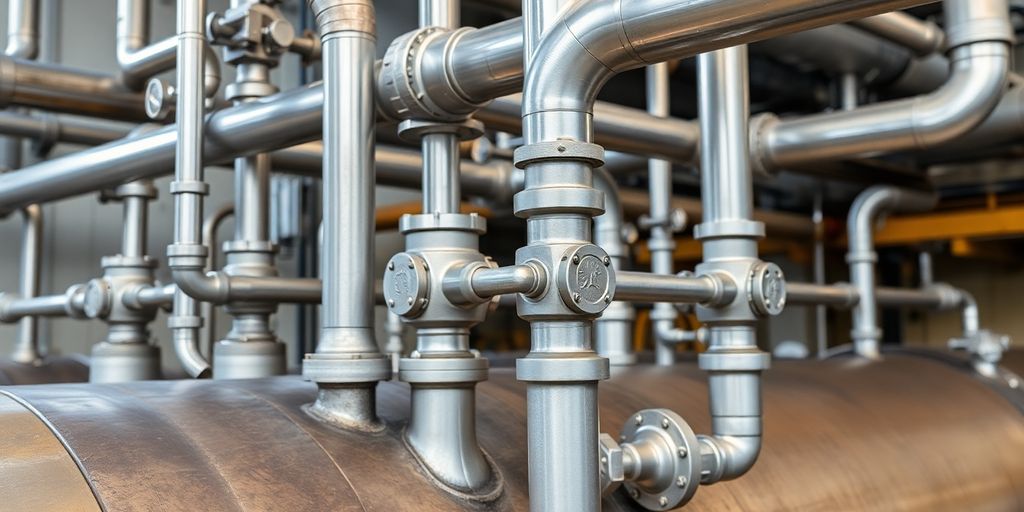
A steam boiler is a device that heats water to create steam, which is then used for various purposes. The main idea is to convert water into steam by applying heat. This process involves several steps. First, water is heated in a closed container called a boiler. As the water heats up, it eventually reaches its boiling point and turns into steam. This steam is then pushed through pipes to where it is needed, whether for heating, powering machines, or other industrial uses. The steam can also cool down and turn back into water, which is collected and reused in the system. This cycle of heating and cooling is essential for the boiler’s operation.
Heat Transfer Methods
Heat transfer in a steam boiler occurs through three main methods: radiation, convection, and conduction.
-
Radiation: This is when heat is transferred through electromagnetic waves. In a boiler, the tubes absorb heat from the flames in the combustion chamber.
-
Convection: This method involves the movement of heated fluids. When water is heated, it becomes lighter and rises, allowing cooler water to take its place, creating a cycle of heating.
-
Conduction: This is the direct transfer of heat through materials. In a boiler, heat moves from the outer part of the tubing to the water inside.
Role of Pressure and Temperature
Pressure and temperature are crucial in the operation of a steam boiler. The pressure inside the boiler helps to keep the steam at a high temperature, which is necessary for efficient energy transfer. Higher pressure means higher temperature, which allows the steam to carry more energy. This is important for applications like electricity generation or heating large spaces. However, managing this pressure is vital for safety. If the pressure gets too high, it can lead to dangerous situations. Therefore, safety valves and controls are essential to ensure the boiler operates within safe limits.
Understanding how a steam boiler works is key to using it effectively and safely. Proper maintenance and monitoring can help prevent issues and ensure efficient operation.
Types of Steam Boilers
Steam boilers come in various types, each designed for specific applications and operational needs. Understanding these types can help in selecting the right boiler for a particular task. The four main types of steam boilers are Firetube, Watertube, Electric, and High Heat Flux Steam Generators.
Industrial Steam Boiler Types
At Tuff, we offer a wide range of industrial steam boilers designed to meet the specific needs of various industries. Below are the main types of steam boilers we manufacture:
1. Gas-Fired Boilers
Our gas-fired boilers are engineered with large combustion chambers for optimal efficiency and reduced emissions. With a thermal efficiency exceeding 103%, these boilers are ideal for industries that require a reliable and clean energy source. Featuring advanced combustion technology, our gas boilers ensure low-NOx emissions as low as 30mg/Nm³, making them environmentally friendly and compliant with stringent emission standards. These boilers are perfect for applications such as food processing, pharmaceuticals, and chemical production, where clean combustion and low emissions are critical.
Key Features:
- High efficiency (103%+)
- Low NOx emissions (30mg/Nm³)
- Fully automated operation for enhanced safety
- Ideal for industries with access to natural gas or LPG
2. Electric Boilers
Our electric boilers offer a clean, efficient, and emission-free solution for industries prioritizing sustainability. These boilers are perfect for facilities aiming to reduce their carbon footprint while still meeting their steam demands. With no combustion required, our electric boilers operate quietly and require less maintenance, making them an excellent choice for industries with strict environmental regulations.
Key Features:
- 100% emission-free at the point of use
- High efficiency with minimal heat loss
- Quiet operation with reduced maintenance needs
- Ideal for small to medium-scale applications and environmentally conscious industries
3. Waste Heat Boilers
Our waste heat boilers efficiently capture excess heat from industrial processes or exhaust gases, converting it into useful steam. These boilers significantly reduce fuel consumption by recovering heat that would otherwise be lost, offering a cost-effective and environmentally friendly solution. Waste heat boilers are widely used in industries like cement, steel, glass manufacturing, and power plants, where energy recovery is critical to operational efficiency.
Key Features:
- Utilizes waste heat from processes or exhaust gases
- Reduces operational costs and enhances energy efficiency
- Customizable to fit specific industrial processes
- Ideal for energy-intensive industries
4. Circulating Fluidized Bed Boilers (CFB)
Our Circulating Fluidized Bed (CFB) boilers are highly efficient and fuel-flexible, capable of burning a variety of fuels—including low-grade fuels like lignite, waste materials, and biomass. With a combustion efficiency exceeding 89%, these boilers also achieve low sulfur and nitrogen emissions, making them ideal for industries seeking to reduce their environmental impact. CFB boilers are commonly used in power generation and waste-to-energy plants where fuel flexibility and environmental compliance are essential.
Key Features:
- High efficiency (89%+)
- Low emissions of NOx and SOx
- Stable combustion and heat transfer
- Ideal for power plants and industries using diverse solid fuels
5. Biomass Boilers
Tuff’s biomass boilers are designed to accommodate a wide range of biomass fuels, such as wood chips, agricultural residues, palm shells, and straw. We tailor the boiler’s structure based on the specific fuel characteristics to ensure high efficiency and stable operation. These boilers help industries significantly reduce their reliance on fossil fuels, lower carbon emissions, and achieve sustainability goals. Our biomass boilers are ideal for industries such as agriculture, food processing, and paper production.
Key Features:
- Compatible with various biomass fuels
- Renewable energy source
- High efficiency and stable operation
- Ideal for industries focused on sustainability and reducing carbon footprint
6. Waste Gas and Liquid Incineration Boilers
Our waste gas and liquid incineration boilers are designed to safely and efficiently dispose of waste gases and liquids generated from industrial processes. By converting these waste streams into usable steam, these boilers reduce environmental impact and improve overall operational efficiency. These systems are ideal for industries such as chemical plants, refineries, and waste treatment facilities that produce hazardous waste streams.
Key Features:
- Efficient disposal of waste gases and liquids
- Converts waste into usable energy
- High thermal efficiency with advanced combustion control
- Ideal for industries with stringent environmental and waste management regulations
By offering a diverse range of industrial steam boilers, Tuff ensures that our clients can find the ideal solution to meet their specific operational requirements. Whether your focus is on reducing emissions, improving energy efficiency, or handling complex waste streams, we provide tailored solutions designed to meet your needs.
Fuel and Combustion in Steam Boilers
Types of Fuels Used
In industrial steam boilers, various fuels are utilized to generate heat through combustion. The choice of fuel can significantly affect the boiler’s efficiency and environmental impact. Here are some common types of fuels:
-
Natural Gas: This is a popular choice due to its clean-burning properties and high efficiency. It produces fewer emissions compared to other fuels.
-
Oil: While not as common as natural gas, oil is still used, especially in areas lacking gas infrastructure. It can be more expensive and less efficient.
-
Coal: Known for its high energy content, coal remains a significant source of heat, despite its environmental drawbacks.
-
Biomass: This renewable option is gaining popularity. Biomass boilers can burn organic materials, making them an eco-friendly choice.
Combustion Process
The combustion process in steam boilers is crucial for converting fuel into heat. Efficient combustion requires a precise mix of fuel and air. This ensures that the fuel burns completely, maximizing heat output while minimizing harmful emissions. Here’s how it works:
-
Fuel Delivery: The fuel is delivered to the combustion chamber through pipes.
-
Air Mixing: Air is introduced into the chamber at the right temperature and speed to support combustion.
-
Ignition: An igniter starts the combustion process, creating a flame that heats the water in the boiler.
Efficiency and Environmental Impact
The efficiency of a steam boiler is often measured by its fuel-to-steam efficiency, which indicates how well the boiler converts fuel into steam. A higher efficiency means less fuel is needed, which can lead to lower operational costs and reduced emissions. Additionally, modern boilers are designed to minimize nitrogen oxides (NOx) emissions, which are harmful pollutants.
Efficient fuel use not only saves money but also helps protect the environment.
In summary, the choice of fuel and the efficiency of the combustion process are vital for the performance of steam boilers. Understanding these factors can lead to better operational practices and a more sustainable approach to energy generation.
Maintenance and Safety of Steam Boilers
Routine Maintenance Tasks
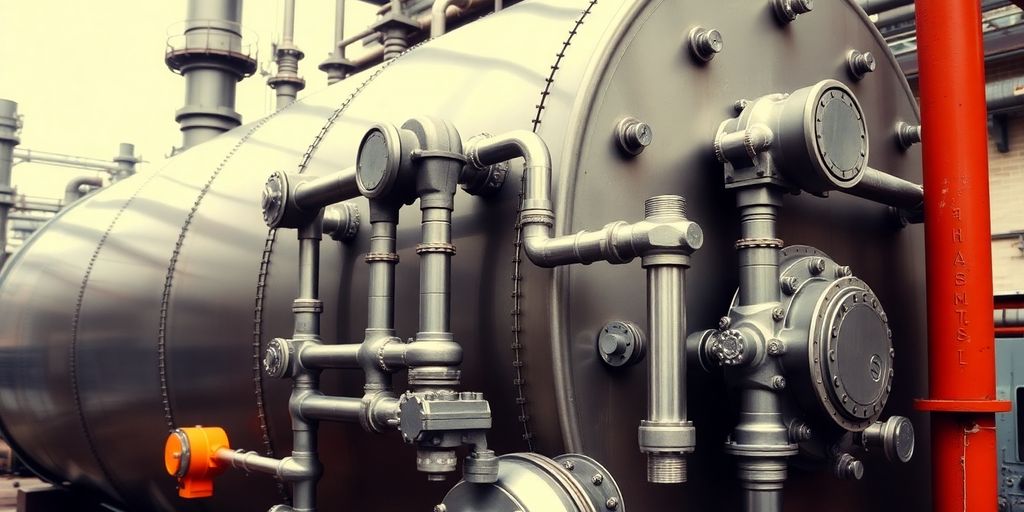
Maintaining steam boilers is crucial for their safe and efficient operation. Regular maintenance tasks include:
-
Inspecting safety valves to ensure they function correctly.
-
Checking water levels and ensuring they are within safe limits.
-
Cleaning the boiler to prevent scale build-up, which can affect performance.
These tasks help prevent unexpected breakdowns and ensure the boiler operates smoothly. Regular maintenance can extend the life of the boiler and improve safety.
Safety Measures
Safety is a top priority when operating steam boilers. Here are some essential safety measures:
-
Training personnel: Only trained and authorized staff should operate the boiler.
-
Regular inspections: Conduct frequent inspections to check for leaks and ensure all safety devices are working.
-
Emergency procedures: Establish clear emergency procedures in case of a malfunction.
Implementing these measures can significantly reduce the risk of accidents and ensure a safe working environment.
Importance of Water Treatment
Water quality is vital for the safe operation of steam boilers. Poor water quality can lead to corrosion and scale build-up, which can damage the boiler. To maintain water quality, facilities often use:
-
Water softeners to remove hard minerals like calcium and magnesium.
-
Chemical treatments to control pH levels and prevent corrosion.
-
Regular testing of water quality to ensure it meets safety standards.
Proper water treatment is essential for the longevity and safety of steam boilers. It helps prevent costly repairs and ensures efficient operation.
Industrial Applications of Steam Boilers
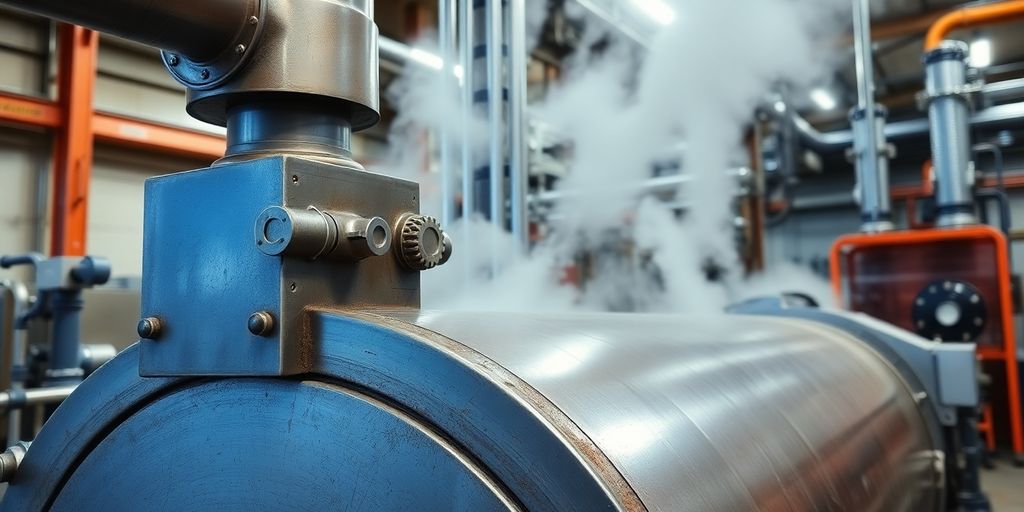
Steam boilers play a crucial role in various industries, providing essential heat and power for numerous processes. These boilers are vital for enhancing efficiency and productivity in industrial operations.
Manufacturing
In the manufacturing sector, steam boilers are used extensively for heating and powering machinery. They generate steam that drives turbines and other equipment, enabling the production of goods. For instance, in textile manufacturing, steam is used for dyeing and finishing fabrics. Additionally, steam helps in maintaining the right temperature for processes like molding and curing materials. The ability to control steam pressure and temperature allows manufacturers to optimize their operations, ensuring consistent product quality.
Power Generation
Steam boilers are also integral to power generation. They convert water into steam, which then drives turbines to produce electricity. This process is common in thermal power plants, where fossil fuels or biomass are burned to heat water. The generated steam is then channeled to turbines, converting thermal energy into mechanical energy. This method of power generation is efficient and can be scaled to meet large energy demands, making it a preferred choice for many energy providers.
Food Processing
In the food processing industry, steam boilers are essential for various applications, including cooking, pasteurization, and cleaning. For example, steam is used to cook food products, ensuring they reach the required temperatures for safety and quality. Additionally, steam is crucial for sterilizing equipment and surfaces, helping to maintain hygiene standards. The precise control of steam temperature is vital in processes like brewing and dairy production, where any deviation can affect the final product’s quality.
Summary of Industrial Applications
|
Industry |
Applications |
|---|---|
|
Manufacturing |
Heating, powering machinery |
|
Power Generation |
Driving turbines for electricity |
|
Food Processing |
Cooking, pasteurization, cleaning |
In conclusion, steam boilers are indispensable in various industrial applications, from manufacturing to food processing. Their ability to provide reliable heat and power makes them a cornerstone of modern industry.
Advancements in Steam Boiler Technology
Innovations in Design
Recent advancements in steam boiler technology have led to significant improvements in design. Modern steam boilers are now more efficient and safer than ever before. One of the most notable innovations is the modular boiler system. Instead of relying on a single large boiler, these systems consist of multiple smaller boilers that work together. This allows for better control over steam production, as each unit can be turned on or off based on demand. Additionally, modular systems take up less space and can be easily scaled up or down depending on the needs of the facility.
Improved Efficiency
Efficiency is a key focus in the development of new steam boilers. Many manufacturers are now using advanced materials and technologies to enhance heat transfer and reduce energy consumption. For example, multi-layer insulation is commonly used to minimize heat loss, ensuring that more energy is used for steam production rather than wasted. Furthermore, electronic control systems allow for real-time monitoring and adjustments, which can lead to significant energy savings.
Here are some benefits of improved efficiency in steam boilers:
-
Lower operational costs due to reduced fuel consumption.
-
Decreased environmental impact by lowering emissions.
-
Enhanced reliability and performance, leading to fewer breakdowns.
Future Trends
Looking ahead, the future of steam boiler technology is promising. Innovations such as smart boilers, which utilize IoT (Internet of Things) technology, are on the rise. These systems can communicate with other devices, allowing for better monitoring and control. Additionally, there is a growing trend towards using alternative fuels, such as biomass or waste products, to power steam boilers. This shift not only helps in reducing reliance on fossil fuels but also promotes sustainability in industrial processes.
The evolution of steam boiler technology is not just about efficiency; it’s about creating safer, more sustainable solutions for industries worldwide.
Conclusion
In summary, a steam boiler is a system that heats water to produce steam, which is then used for various purposes. It works by burning fuel to generate heat, which transforms water into steam. Steam boilers come in different types based on their design, fuel source, and the pressure they create. They transfer heat through three main methods: radiation, convection, and conduction. The variety in designs and types of steam boilers reflects their specific uses and construction needs.